
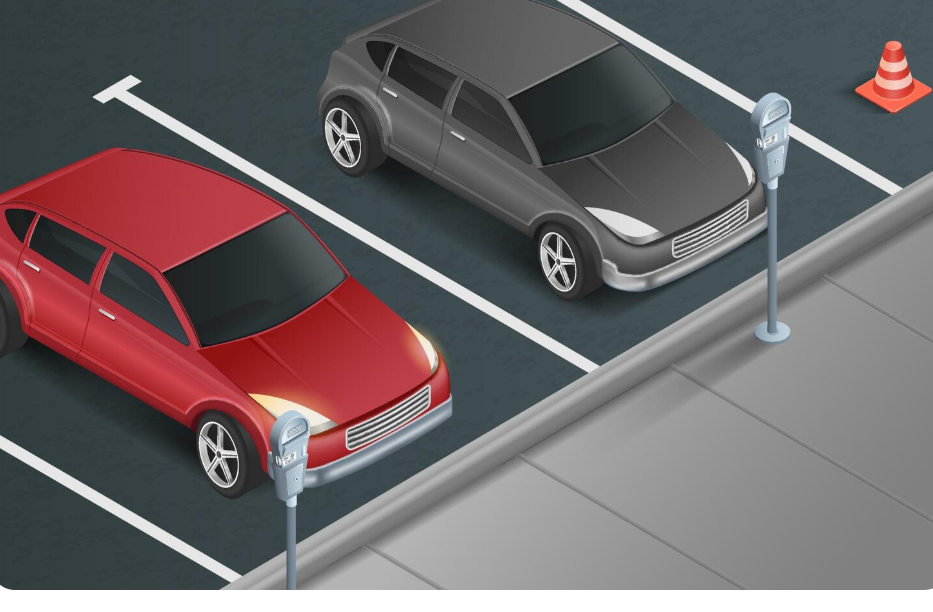
For many drivers — especially those who are newly licensed — parking represents one of the most anxiety-inducing aspects of driving. The combination of spatial judgment, vehicle control, and situational awareness required for good parking is genuinely demanding. Yet with the right safe parking techniques and consistent practice, every driver can park with confidence, accuracy, and consideration for others.
Bay Parking: Forward and Reverse
Bay parking is the most commonly required parking maneuver in everyday life — supermarkets, car parks, and workplaces all demand it. There are two approaches: forward bay parking and reverse bay parking. Reverse bay parking is generally considered the safer option because it gives you better visibility when leaving the space, and many driving tests now include it as a required skill.
For reverse bay parking, position your vehicle parallel to the bay, approximately one car’s width from the bays, and identify your target space. As the rear of your car aligns with the bay, begin steering into it, using your reference points on the car and bay lines to guide you. Check all mirrors and blind spots throughout the maneuver. Straighten the wheel as your car becomes parallel with the bay lines, and check your distance from surrounding vehicles before stopping.
Parallel Parking: One of the Most Important Safe Parking Techniques
Parallel parking remains one of the most challenging safe parking techniques for drivers at all levels. Done well, it’s an elegant demonstration of vehicle control; done poorly, it can result in damaged vehicles and blocked traffic. The key is using reference points specific to your own vehicle and practicing until those points become instinctive.
The general procedure: position alongside the vehicle in front of your target space, begin reversing while steering left, use your rear reference point to straighten, steer right to bring the front of the car in, then adjust forward and back until you’re parallel and appropriately positioned from the kerb. Aim to end up no more than 30 centimeters from the kerb, parallel and leaving space for the vehicles in front and behind.
Always check mirrors and blind spots before each steering input, and be aware of cyclists and pedestrians who may pass the side of your vehicle during the maneuver.
Parking on Hills: Uphill, Downhill, and Kerb Wheels
Hill parking requires specific technique to prevent a vehicle from rolling in the event of brake failure. When parking facing uphill with a kerb, turn the front wheels away from the kerb. If the vehicle begins to roll forward, it will contact the kerb and stop. When parking facing downhill with a kerb, turn the front wheels toward the kerb. Without a kerb (uphill or downhill), turn wheels to the right so the vehicle will roll onto the shoulder rather than into traffic.
Always apply the handbrake firmly when parking on a slope, and where possible, leave the vehicle in first gear (or reverse on an automatic) as an additional safety measure. These are critical safe parking techniques that can prevent serious accidents.
Vehicle Control Techniques That Make Parking Easier
Good vehicle control techniques underpin every parking maneuver. Slow, controlled speed — using the clutch biting point in manual vehicles, or light brake pressure in automatics — gives you maximum time to steer, observe, and adjust. Many parking errors occur because the vehicle is moving faster than the driver can process and correct.
Effective use of your reference points — markings on your bonnet, dashboard, or windows that correspond to positions outside the vehicle — removes the guesswork from parking. Every car has different reference points; it’s worth spending time in a quiet car park identifying and memorizing yours. This transforms parking from an uncertain exercise into a reliable, repeatable process.
How to Teach Driving at Home: Parking Practice Tips
For parents helping their teenagers learn, parking is often the most nerve-wracking skill to supervise. When considering how to teach driving at home, create a structured, low-pressure environment for parking practice. Begin with forward bay parking in an empty car park before introducing reverse parking or parallel parking. Use cones to mark bay lines until the learner can identify real markings reliably.
Break each maneuver into stages and practice each stage separately before combining them. Calm, specific guidance (“turn the wheel a quarter turn left now”) is far more helpful than general alarm (“you’re going to hit the car!”). Celebrate incremental progress and build gradually toward confident, independent execution.
Technology and Parking: Sensors, Cameras, and Their Limits
Modern vehicles often come equipped with parking sensors, reversing cameras, and even self-parking systems. These are genuinely useful aids, but they have significant limitations. Sensors don’t detect low obstacles or thin objects; cameras have blind spots; self-parking systems can struggle in complex environments. Relying exclusively on technology without developing underlying safe parking techniques is a risky approach.
Use these aids as supplements to your own spatial awareness and mirror checks, not replacements for them. The best parking practice uses technology and manual skill together, with manual awareness always serving as the primary safety check.
Conclusion
Safe parking techniques are a combination of vehicle control skill, spatial awareness, methodical procedure, and confident execution. They require practice but reward effort with a capability that makes every driving experience more comfortable and less stressful. Whether you’re a new driver building these skills for the first time or an experienced driver looking to refine your technique, approaching parking with patience and method will make it one of your most reliable driving skills.

